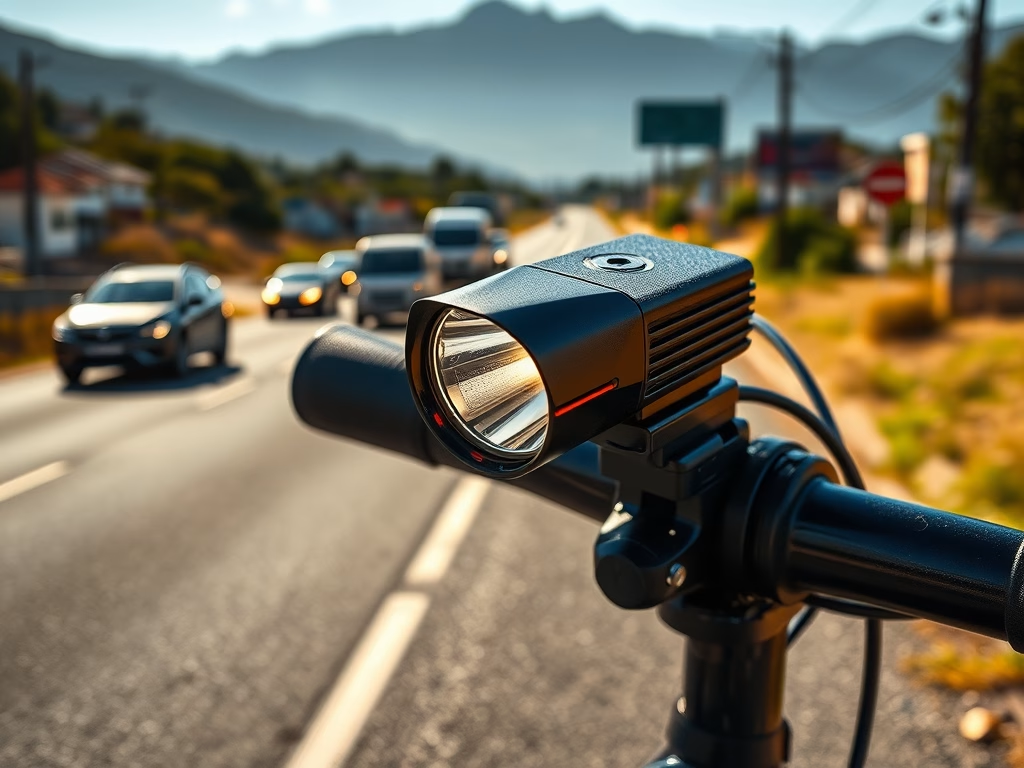
The Ideal Daytime Riding Bicycle Light That Will Elevate Your Visibility on South African Roads
This recommended guide about my #1 choice on the ideal - daytime riding bicycle light - is not based on lab tests or overseas reviews. It’s based on real riding conditions in South Africa, real-world testing, and lived experience across road commuting, MTB, gravel, and group rides.
If you ride a bicycle in South Africa, daytime riding visibility is not optional — it’s survival.
Between fast-moving traffic, taxis stopping unpredictably, trucks drifting over lanes, pedestrians walking in the road, and long stretches of open farm or gravel roads, cyclists need to be seen, not just present.
The best bicycle lights for daytime visibility in South Africa are lights designed to assert presence, not just brightness. A minimum of 120 lumens, effective pulse modes, and long battery life are essential for riding safely in traffic, on gravel roads, and during group rides.
Why A Daytime Riding Bicycle Light And Why It Matters More Than You Think.
Most cyclists still associate bike lights with night riding. That’s a mistake. A proper daytime riding light designed for visibility rather than just night riding makes a massive difference.
A daytime bike light is not about lighting the road — it’s about asserting presence. It tells drivers, pedestrians, and other road users: there is a cyclist here — pay attention.
This becomes critical when:
- Riding to MTB trails via public roads
- Training early mornings or late afternoons
- Riding gravel or farm roads with poor visibility
- Navigating urban traffic or group rides
In my own riding, I use a daytime light almost every ride, regardless of time of day. Not because it looks good — but because it works.
The Biggest Mistake I Made When Riding With A Standard Bicycle Front Light In Daytime.
I was convinced like most South African cyclists that:
“More lumens equals more safety.”
That thinking is flawed.
Brightness alone doesn’t equal visibility. How the light behaves matters far more than raw output. A well-designed 120-lumen daytime light with the right flash pattern will outperform a higher-lumen light with poor battery life or ineffective modes.
Daytime visibility is about:
- Contrast
- Motion
- Attention-grabbing patterns
- Consistency over long rides
The Lumens Reality in South African Daylight
After extensive real-world use, here’s my honest breakdown:
120 lumens is more than sufficient for daytime visibility
200 lumens paired with a small battery is overkill and impractical
50 lumens is ineffective — a cellphone flashlight would be better or pretty much the same.
The sweet spot is balanced output paired with serious battery capacity.
A daytime riding bicycle light must still be running hours later, not flashing brightly for the first 45 minutes and then dying quietly when you need it most.
Why Battery Life Is the Silent Safety Killer
Long battery life is what separates a safety tool from a forgotten accessory. Most cyclists stop using daytime lights for one reason:
They forget to charge them.
Short battery life creates bad habits. If a light constantly needs charging, riders stop trusting it — and eventually stop using it.
Before buying a daytime bike light, make sure it ticks these boxes:
- At least 120 lumens designed for visibility, not night riding
- Pulse or breathing mode that grabs attention without blinding drivers
- Large battery capacity close to 5000mAh for long runtime
- USB-C charging for convenience and fast top-ups
- Reliable battery life that lasts weeks, not rides
- Compact, clean mounting so you actually keep using it
- Designed for South African traffic conditions, not overseas bike paths
If a light misses more than one of these, it’s a compromise on safety.
When battery life is strong enough, charging becomes something you barely think about — which is exactly how safety gear should work.
Flash Patterns That Actually Work in Traffic.
In real traffic, not all flash modes are equal.
Continuous beams are easy to ignore.
Fast strobes can be disorientating or irritating even aggravating.
The most effective mode in South African traffic is a controlled pulse:
- Slow enough to avoid irritation
- Strong enough to demand attention
- Visually distinct from background noise
Pulse-style modes communicate caution, not aggression — and that distinction matters on busy roads.
Real South African Case Study: When a Daytime Riding Bicycle Light Prevented an Accident
During a Thursday night group ride with nine riders in single file, we encountered a dangerous situation.
A pedestrian was walking in the road ahead of us. Cars were approaching fast from behind, leaving no safe escape route.
Because my daytime light was running in pulse mode, it illuminated a nearby road sign. The reflective material on the sign began flashing visibly. The pedestrian noticed it, looked back, and moved out of the road just in time.
That moment prevented a serious incident.
This is what real-world safety looks like — not theory, not specs.
Mounting, Size, and Why Cyclists Sometimes Forget To Use Their Front Lights During Daytime Riding.
Cyclists abandon lights when they are:
- Bulky
- Awkward to mount
- Visually messy
- Constantly needing adjustment
Convenience beats specs. A clean, out-front mounting solution keeps the light visible and actually used.
A light that integrates cleanly with your cockpit, mounts securely, and stays out of the way will be used consistently — and consistency is what saves lives.
Price Truth: What Daytime Riding Safety Is Actually Worth.
Based on real use and customer feedback:
Below R700: often compromised or unreliable
R700–R940: the best balance of safety, battery life, and durability
Over R1000: diminishing returns with little added safety
Beyond a certain point, price reflects branding rather than meaningful performance.
If you are looking for a more affordable and practical everyday solution, the Cyclami CL350 Daytime Riding Light is an excellent second option. It still delivers strong 350-lumen daytime visibility, wide-angle warning lights and reliable battery life for early morning training, commuting and riding to the trails. It is compact, easy to use and designed to help cyclists become more noticeable in real-world traffic conditions. For riders who want to improve their safety without investing in a top-tier system right away, the Cyclami CL350 Daytime Riding Light is also a very smart and dependable choice.
Non-Negotiable Rules for a Daytime Riding Bicycle Light in South Africa.
If a light doesn’t meet these criteria, it’s not worth considering:
It must offer a strong battery capacity close to 5000mAh
It must deliver at least 120 lumens for daytime visibility
It must include effective pulse-style daytime modes
It must be reliable enough that you stop worrying about charging
Anything less is a compromise on safety.
Choosing the Right Daytime Riding Bicycle Light
If you’re riding regularly on South African roads, the right daytime bike light should feel like something you forget about — not something you constantly manage.
When a light lasts weeks between charges, runs effective pulse modes, and stays visible without being irritating, it becomes part of your safety system rather than another accessory.
That’s the difference between owning a light and actually using one.
For riders who value long battery life, clean mounting, and real-world visibility, a purpose-built daytime riding light makes far more sense than adapting a night light for daytime use.
Final Thoughts
Daytime riding bicycle lights are no longer optional accessories — they are essential safety equipment for All cyclists especially in South-Africa.
The right light doesn’t just make you visible.
It changes how traffic responds to you.
It buys you reaction time.
It prevents close calls from becoming a statistic.
Ride visible. Ride prepared. Ride like your safety depends on it — because it does. Be Seen, Be Safe.
| Primary Purpose | Being Seen By Traffic | Lighting The Road |
| Typical Lumen Range | 100-150 lumens | 800-2000+ lumens |
| Flash / Pulse Modes | Essential | Optional |
| Battery Priority | Long Runtime Up To 50 Hours | High Output (2-5 Hours) |
| Mounting Style | Compact - Always Mounted | Larger - Performance Orientated |