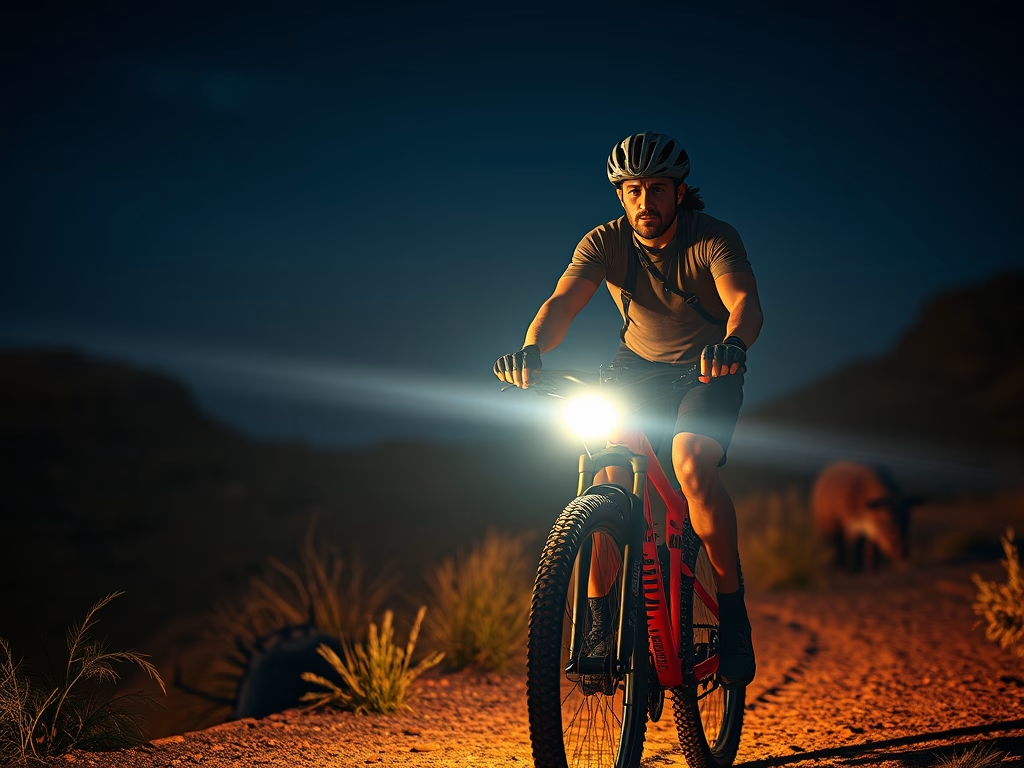
The Perfect Bike Light for 2026: A Basic Guide From Cost To Features
If you’ve ever searched “How much does a bike light cost?” you’ve probably noticed one thing immediately: the prices are all over the place. From R300,00 combo deals to R3 500,00 high-powered systems with external battery packs, it’s hard to know what’s actually worth your money. This guide isn’t theoretical. It’s based on real riding, real testing, and real mistakes made (and avoided) over years of night riding, early-morning training, and gravel adventures in South African conditions.
The Short Answer To: How Much Does A Bike Light Cost?
In South Africa, bike lights generally fall into three categories:
- Budget lights: R300 – R600
- Mid-range lights: R700 – R1 500,00
- Premium lights: R2 000,00 – R3 500,00+
But price alone means nothing without understanding what you’re using the light for.
Riding Context Matters More Than Price When Considering A New Bike Light
- Most of my riding involves MTB Group Night Rides
- Early morning training rides on gravel and trails
- General afternoon solo rides.
South African conditions are tough on lights. Poor road lighting, farm trails, wildlife, potholes, taxis, and long stretches of total darkness mean your light isn’t just about visibility — it’s about survival and confidence.
A commuter riding 30 minutes in a city needs a very different light to someone doing a 2–3 hour MTB night ride.
My Personal Experience With Bike Light Testing/Riding
Over the years I’ve personally used and tested roughly 15–20 different bike lights, ranging from:
- R300 combo front-and-rear deals
- Mid-range integrated lights
- Older premium systems with cables and external battery packs costing up to R3,500 This includes lights that looked great on paper but failed in real riding conditions.
The Honest Price Breakdown (What’s Worth It and What’s Not)
Price Range That’s Often Not Worth It
Ultra-cheap lights usually fail in one or more of these areas:
- Battery dies before the ride ends
- Weak mounts that shake loose on trails
- Poor water resistance
Cheaper is not always better and Expensive is not always worth the money.
The Bike Light Sweet Spot
From real-world use, the sweet spot sits firmly in the mid-range:
- Strong enough output for MTB and gravel riding
- Reliable battery life
- Solid mounting system with adaptors
- Durable materials
You don’t need to spend R3 500,00 anymore to get serious and reliable performance.
Where Returns Diminish
Once you pass a certain price point, you’re often paying for:
- Brand name
- Marginal gains
- Features most riders never use
More expensive does not automatically mean safer or better for most cyclists.
Features That Actually Justify the Cost
After years of testing, these are the features that truly matter and justify a higher price and I found it in the Cyclami BR2000 Next Gen 2000 Lumen Front Bike Light:
- True 2000-lumen output (usable, not marketing lumens)
- Wide beam pattern with up to 200m firing range
- CNC premium aluminium alloy body (for heat dissipation and durability)
- 21700 high-performance battery (4500mAh)
- Battery life of 4–10 hours, depending on mode
- High and low beam modes (not just brightness levels)
- Type-C USB charging
- IPX6 waterproof rating
- Compact size: 10.9cm x 3.9cm x 2.8cm
- Weight around 190g
These features make the difference between finishing a ride confidently and riding home with anxiety or in your riding partner’s light.
Real Case Studies from the Trails
- I’ve used a R2,500 light where the battery died after two hours at high brightness. On paper it was “premium,” but in practice it failed when it mattered most.
- I’ve tested and still my Cyclami BR-2000 Next Gen 2000 Lumens sub-R1 000,00 light that outperformed more expensive brands in beam shape, heat control, and reliability.
- One lesson most cyclists only learn by ride number three: two hours of battery life is not enough when riding at high brightness, especially on MTB trails.
Common Mistakes Cyclists Make When Buying Lights
These are the mistakes I see most often:
- Beam Shape – Make sure Wide Beam Output
- Ignoring battery capacity and real-world runtime
- Choosing lights with weak mounts that vibrate loose
- Assuming all lights are waterproof
- Battery failure and mounting issues are the biggest deal-breakers.
So… How Many Lumens Do You Actually Need?
As a general guide:
- Urban commuting: 600–1000 lumens
- Gravel and rural roads: 1000–1500 lumens
- MTB night riding: 1500–2000 lumens
For South African farm roads and trails, 1500-2000 lumens with a wide beam is the sweet spot for safety and confidence.
My Go-To Recommendation (Based on Real Use)
After testing multiple lights across price ranges, my all-time go-to light is:
- Cyclami BR2000 Bike Light 2000LM
- Designed for MTB, gravel, and road riding, it hits the real-world sweet spot:
- Powerful with sleek, low-profile compact design
- Long battery life without external packs
- Excellent beam spread for trails and roads
- Built for South African riding conditions
- 12 Month Warranty
- It’s the kind of light that makes you forget about your light and focus on your ride — which is exactly what good gear should do.
One of the biggest indicators of whether a bike light is worth its price is real rider feedback. In the mid-to-upper price range, lights that consistently receive strong reviews tend to offer a noticeable jump in brightness, reliability, and build quality. A good example is the Cyclami BR2000 front light, which recently received another 5-star customer review on Takealot. Riders regularly mention the powerful beam, solid mounting system, and endurance it gives them during night rides. This kind of feedback reinforces that spending a bit more on a quality bike light isn’t about paying for features you don’t need — it’s about paying for performance you can trust when visibility really matters. You can view real customer reviews for the BR2000 on Takealot here: View on Takealot
Final Take Away
Bike light prices vary because rider needs vary. The goal isn’t to buy the cheapest or the most expensive light — it’s to buy the right light for how and where you ride.
If you ride early mornings, gravel, or MTB trails in South Africa, investing in a properly designed mid-range light with proven features will give you more value, safety, and confidence than chasing either “extreme”.